
For millions of people, standing for long hours is simply part of everyday work. From healthcare professionals and teachers to retail employees, chefs, factory workers, and hospitality staff, many careers require people to stay on their feet throughout the day. While standing is a natural part of human movement, doing it continuously can become uncomfortable without the right habits and support.
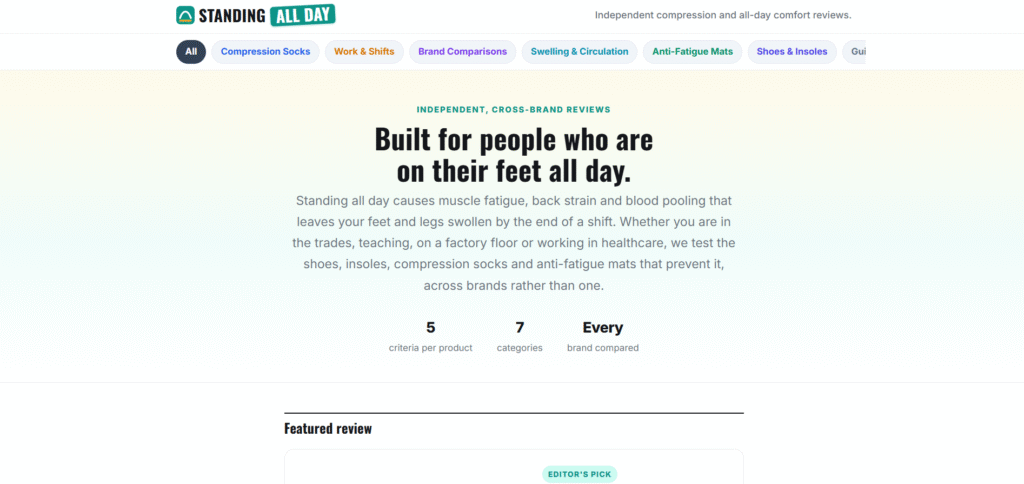
StandingAllDay.com is a relevant resource concept for anyone looking to understand the challenges associated with prolonged standing and discover practical ways to make long workdays more comfortable.
Why Long Periods of Standing Can Be Tiring
When you stand for an extended period, your feet continuously carry your body weight. Your muscles also remain engaged to help maintain balance and posture. Over several hours, this can contribute to general fatigue and discomfort.
Hard workplace floors can make the experience more demanding. Workers may notice tired feet, aching legs, sore heels, or lower-back discomfort after completing a long shift.
The good news is that several simple adjustments can improve the overall experience.
Invest in Comfortable Work Shoes
The shoes you wear can have a major influence on your comfort. A good work shoe should fit correctly while providing appropriate cushioning and support.
When selecting footwear, consider the shape of your feet rather than choosing a shoe based only on appearance. There should generally be enough room for your toes, while the heel should remain secure without excessive pressure.
It’s also worth checking your shoes regularly. Worn-out soles and compressed cushioning may provide less support than they did when the shoes were new.
Use a Supportive Floor Mat
People who stand in one location for most of their shift may benefit from an anti-fatigue mat. These mats are particularly common in workplaces such as kitchens, checkout areas, workshops, laboratories, and service counters.
A quality mat can provide some cushioning between your feet and a hard floor. It can also encourage subtle movement rather than forcing you to stand rigidly in one position.
The ideal mat should remain stable and should not create a tripping hazard.
Avoid Standing Completely Still
One of the simplest strategies is to keep moving whenever your work allows it.
You don’t necessarily need to take a long break. Small movements can make a difference. Walk around the workspace, change your stance, move your ankles, or shift your weight from one foot to the other.
These small actions can help break up long periods of stationary standing.
Pay Attention to Workplace Ergonomics
Ergonomics isn’t only relevant to office workers. People who stand at work can also benefit from an ergonomically designed environment.
Frequently used tools should be positioned within comfortable reach. Counters and work surfaces should ideally be at a suitable height, reducing the need for constant bending, stretching, or shoulder elevation.
A well-organized workstation can reduce unnecessary physical strain during a long shift.
Don’t Forget About Posture
Standing comfortably requires more than simply keeping your back straight.
Try to maintain a balanced stance and avoid consistently leaning toward one side. Keep your shoulders relaxed and avoid locking your knees for extended periods.
Changing your position throughout the day is also important. Good posture should allow natural movement rather than forcing your body into a rigid position.
Make Recovery Part of Your Routine
What you do after work matters too. After spending many hours standing, your body may need time to recover.
A simple recovery routine might include changing out of work shoes, sitting comfortably, drinking water, and performing gentle movements.
Some people also find it comfortable to elevate their legs for a short period after a demanding shift.
Choose Comfortable Clothing
Although footwear receives most of the attention, clothing can also influence workplace comfort. Tight or restrictive clothing may make movement more difficult.
Choose work clothing that allows you to move naturally and suits the environment you’re working in. Breathable fabrics can also be useful in warm workplaces.
Stay Consistent
Improving comfort isn’t necessarily about making one major change. Often, several small improvements work together.
For example, someone who spends eight hours standing might combine supportive shoes with an anti-fatigue mat, regular position changes, good hydration, and short rest periods.
Over time, these habits can become part of a normal work routine.
When Discomfort Shouldn’t Be Ignored
Occasional tiredness after a long day can happen, but persistent or severe discomfort deserves attention. If pain continues, becomes worse, or affects normal activities, consider discussing it with an appropriate healthcare professional.
Symptoms such as significant swelling, numbness, weakness, or sudden severe pain should not simply be assumed to be caused by standing.
The StandingAllDay.com Perspective
The idea behind StandingAllDay.com is straightforward: people who spend much of their day standing deserve practical information about comfort, footwear, movement, posture, and workplace habits.
Instead of looking for one universal solution, it’s often more useful to consider the complete picture. Your shoes, work surface, posture, movement habits, and recovery routine can all influence how you feel during and after a long shift.
Final Thoughts
Long hours on your feet can be demanding, but they don’t have to be unnecessarily uncomfortable. Small adjustments can help create a more supportive working routine.
From choosing better footwear to moving regularly and improving your workstation, there are many practical steps worth considering. StandingAllDay.com serves as a strong topic for exploring these ideas and helping workers think more carefully about comfort during long standing periods.
Ultimately, the goal is simple: work comfortably, pay attention to your body, and develop habits that support your everyday wellbeing.